Tuesday, February 11, 2014

My favorite travel hack

We've taken great advantage of our time here in Europe to travel around the continent.  There are various well-priced airlines such as Vueling, Ryanair, Easyjet, and Wizzair, and distances are relatively short so travel time is minimal.  My all-time-favorite travel hack so far is www.homexchange.com.  It's a wonderful way for upper/middle-class families to travel wherein you exchange your home with someone else. Exchanges may be simultaneous or not.  Unlike some property exchange services which have annoying point systems and charge fees per exchange, this one only charges a listing fee, and does not try to control your communication with the other party.

Bright and spacious 4 bedroom in the Heart of Barcelona

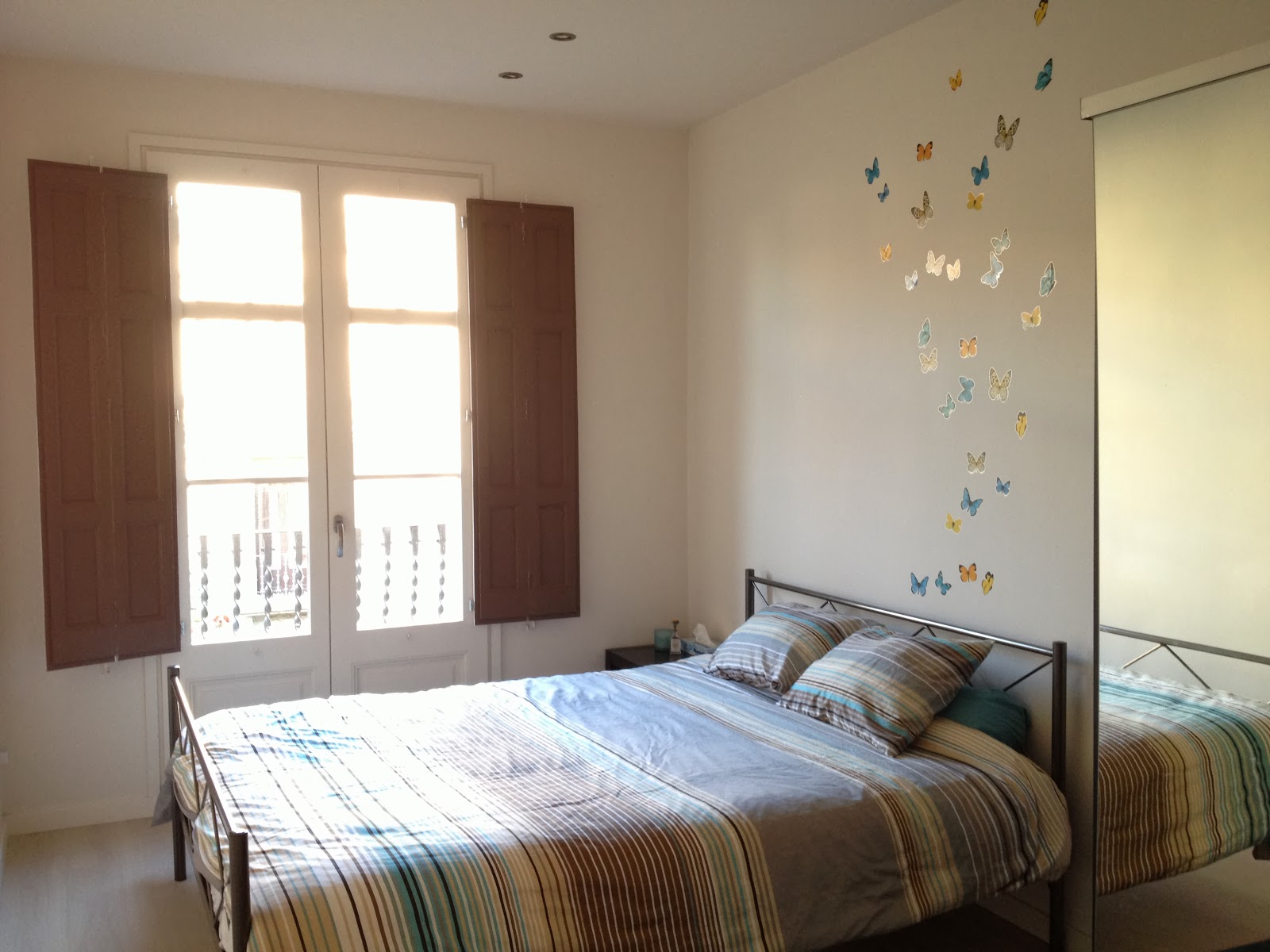


I've been a member for less than a year, and have already completed three fantastic exchanges and have three more arranged.  Hotel accommodations for a family of four in any European city easily costs between 150-300 euros per night.  With a year's subscription of about 200 euros, we have already spent 26 nights on home exchange, for a savings of at least 5,000 euros, and by the end of the summer we will have NOT spent another 7,800 euros in lodging fees.  Single people and couples may find airbnb.com or hostels useful when traveling on a budget, but with a family its much preferable to have a kitchen and separate bedrooms at your disposal.  I used to rent apartments via vrbo.com for longer stays, or aparthotels for shorter stays, but again the costs were much greater.


If you think about it, it doesn't make sense to travel and leave your home empty.  Your expenses for rent, cable TV, internet, and furnishings are already fixed.  Given that we do not have anything of great value in the apartment, we can freely turn it over to another family to enjoy.  But it is easy enough to leave jewelry or sensitive documents with friends or in a locked closet.

Clearly, there is an element of trust involved.  On the website one can see photos of the home, and one can generally tell right away whether the people share your idea of aesthetics, order, and cleanliness. With video chat such as Skype, Google hangout, and Facetime at your disposal, it is easy enough to virtually meet prospective exchange partners, their children, and verify that the home in the photos is the one they live in.  Of course some people list their second homes for exchanges, but one can also view reviews by other travelers which can confirm the trustworthiness of the listing.  I believe that few criminals choose to masquerade as families with children.  Or course if a place looks too good to be true, it might very well be.


The biggest negative of the system is time.  I have logged a lot of hours browsing listings in our various target cities, and sent out hundreds of inquiries, many of which are denied or don't work out with timing.  But a less enthusiastic user could just sit back and wait for inquiries to arrive in your inbox, and just take advantage of those if they pique one's interest.  Hint:  listings which have been recently updated are placed earlier in search results, and thus receive more inquiries.  So if you add a sentence or photo every month or so, live in a desirable area, or have a beautiful home, you will receive no shortage of exchange proposals.  The website has a functional interface which allows one to search by location, type of vacation, and limit searches by number of bedrooms, etc.  Naturally it is important to take good photos and make your listing as attractive as possible.  Many of the listers speak English, and if not, there is always googletranslate.com!  You can also limit your searches to people who claim to speak the same language as you, but what fun is that?  Getting to know someone local can also been a great help in planning your trip, especially in getting recommendations for things to do.

The next thing required is organization.  It is best to plan months in advance.  For example, the French and the Germans who have the entire month of August off each year like to lock things down six or eight months in advance.  And of course travels during the winter holidays are usually planned early. Multiple emails are required to come to agreement about travel dates, for example.  Then in addition to packing and preparing for your trip, one also has to wash and change sheets, towels, and leave the place clean for your guests (or arrange for your cleaner to do it).  It takes time to write up a document explaining how to use each appliance in the house, but once completed it can easily be reused.  The same goes for the map of the neighborhood highlighting the market, post office, metro stops, restaurants, parks, etc. nearby.  Google maps are easy to create and share online.  Finally, it's optional, but I like to exchange a simple contract with the other party so that our expectations are very clear.  It lists the dates agreed upon, addresses of the homes, contact information, and obvious things like "no smoking inside the house" and "guests will reimburse or replace any food items consumed or items damaged or broken during stay."

Lights and luscious luxury in Lyon


We have had no issues so far.  In fact it has been a delightful experience to drop into a new country with everything we need provided at no extra costs, be it carseats, bicycles, even kayaks and cars! One lady even picked us up from the airport and gave us honey from her own bees.  We don't have pets, so it was fun for the kids to have rabbits and turtles for two weeks, and then not.

Definitely, we will continue exchanging homes even after we return to the states.  For travel addicts like ourselves, it's a life saver.

 
Bees, bunnies, and bicycles in Berlin


Thursday, December 19, 2013

Mi Llegada a Espana


Escribí este ensayo para mi clase de español.  


España nunca había sido un país que me llamara la atención.  Crecí en Hawai como hija de padres chinos.  Por eso, estudié mandarín y como siempre había vivido cerca del Océano Pacífico, siempre había mirado al Oriente.  Nunca habría imaginado que pudiera vivir aquí en España.  Pero de hecho me casé con un hombre al que le encanta el español y durante diez años le escuché hablando con nuestros hijos en casa en español.  Así que sin saberlo empecé mi trayecto hacia España.  

Mi llegada a España fue de golpe.  Hacía unos años habíamos planeado vivir en el extranjero y como mis hijos ya habían estudiado español, fue lógico que nos mudáramos a un país hispanohablante.  En 2011 viajamos a Andalucía y Madrid y lo pasamos muy bien.  Nos parecía que podríamos vivir en España sin sufrir mucho.  Decidimos que si mi marido pudiera conseguir trabajo aquí, vendríamos.  Mi marido había venido a Barcelona en julio de 2012 y yo nunca habría imaginado que al cabo de un mes pudiera conseguir trabajo.  Cuando lo logró a principios de agosto, solo tuvimos tres semanas para empacar o vender todas nuestras pertenencias, alquilar la casa, buscar una escuela para nuestros hijos e irnos a una ciudad desconocida.  ¡Qué locura!  Así empezó mi aventura en España.

Pero las dificultades no acababan ahí.  Como nunca habíamos oído catalán, no conocíamos a nadie, no entendíamos dónde ni cómo hacer cosas como alquilar un piso o matricular a los niños en la escuela,  las primeras semanas fueron frenéticas y estresantes.  Además, nunca había vivido sin coche, algo muy raro en los EEUU.  Durante los primeros meses me dolían mucho los pies porque no estaba acostumbrada a caminar tanto.  

Lo peor fue que no sabía hablar.  Entendía bastante de lo que decía la gente, pero no podía responder ni expresar mis pensamientos.  Cuando salíamos con amigos españoles, después de unas horas me dolía mucho la cabeza.   ¡Qué suerte que hubiera podido estudiar en la Escuela Oficial de Idiomas!  Le comenté a mi marido de que si hubiera sabido que iba a ser tan difícil aprender español, tal vez no habría venido.   Hoy, a principios de mi segundo año aquí, todo es más fácil.  Tengo amigos, conozco la ciudad y me siento más relajada y menos limitada.

A veces pienso en mis padres, que se trasladaron a los EEUU buscando una vida mejor cuando eran jóvenes y ahora entiendo porqué siempre han sido trabajadores.  Nosotros, por otro lado, elegimos venir y tenemos suficiente dinero, pero aún así la experiencia ha sido bastante dura.  Para ellos debería haber sido mucho más traumática.  ¡Esto es la supervivencia!

Al comienzo de mi vida aquí, lo que más me llamó la atención fue la arquitectura modernista.  Las primeras semanas que vivía en L’Eixample me quedé tan impresionada que no podía ni hablar.  Tomé miles de fotos de farmacias, fachadas floridas, puertas adornadas y vidrieras.  ¡Qué lástima que después de unos meses ya no sintiera el mismo ardor que antes!  Sin embargo sigo encantada con la gracia de los edificios barceloneses.

A lo que no logro acostumbrarme es al horario español.  Vengo de un país donde la gente cena a las seis y los niños se acuestan a las 8.  Hay un dicho americano que advierte:  Acuéstate temprano, levántate pronto y así serás sano, rico y sabio.  Poco a poco hemos cambiado nuestro horario, pero aún hoy en día cenamos no más tarde de las ocho y mis hijos se acuestan no más tarde de las diez entre semana.  No lo quiero cambiar más porque creo que los niños españoles no duermen suficientemente.  

Lo que menos me gusta de Barcelona son los ladrones.  Donde vivía antes nunca fui víctima como aquí.  Recuerdo con amargura que en un año nos han robado unos billetes de metro, una cartera, una mochila, un par de botas de fútbol, un asiento de bicicleta y hasta una bicicleta entera.   Un día en la estación de metro de Drassanes, un hombre que estaba detrás de mí abrió mi mochila.  Cuando le acusé se fue al otro andén de la estación.  Fui a la oficina de la estación para notificar a los agentes del metro que había un ladrón, pero ellos no más se rieron y no hicieron nada.  Eso no lo soporto. Tampoco soporto a los fumadores y la gente que deja la caca de sus perros en la calle.  Pero antes estas situaciones hay que resignarse.  

Lo que más me gusta de Barcelona es que la gente realmente participa en la democracia.  Estoy muy impresionada con la abundancia y el número de participantes de las huelgas y las manifestaciones y sobre todo de que sean pacíficos.  En los EEUU la gran mayoría de la gente es apática o si tiene opiniones, las expresa sin civismo. Claro, es un momento un poco especial en Cataluña con el movimiento de independencia y la crisis, pero es fantástico que desde los jóvenes hasta los viejos estén interesados en lo que hace el gobierno.  

Pienso que los catalanes no son muy diferentes de los californianos del norte.  Es verdad que los españoles hablan en voz alta, que a veces no te escuchan y frecuentemente te cortan.  Pero también son sinceros, simpáticos y educados.  Por suerte no he experimentado un gran choque de culturas y disfruto mucho mi estancia aquí.  

Friday, November 22, 2013

City Living

I've lived all my life in the suburbs, and I liked it that way.  Recently I've discovered my urban identity.

Growing up in Hawaii, on the island of Oahu, my family lived on the windward side, and every day we had to take the highway which passed through tropical jungle and tunneled through lush, green mountains.  It was gorgeous.  But also a pain in the rear.  Going to school or work was an hour-long slog in stop-and-go traffic, and same thing on the way home.  At least the scenery was good, the air fresh and the sky blue.  I didn't like the feeling of being in Honolulu, in the "big city. " The buildings blocked the sunlight and I was not used to the noise of traffic or having strangers everywhere in close proximity.  I liked my peaceful neighborhood with streams to play in, fruit trees, and flowers, but I did not like being isolated from my school friends.

The Stanford campus felt comfortable, with it's low-rise buildings and vast green spaces.  The buildings are spread rather far apart, so a bicycle is an absolute necessity, and the feeling of wheeling around with the wind in my hair was liberating.  While in college I visited Boston, New York, Philadelphia, Chicago, and did an internship in Washington D.C.  I enjoyed the excitement of these cities-- the restaurants, the cultural life, the metro and the architecture, but they were just short sojourns.  I have never had the desire to live in foggy San Francisco, with its parking nightmares and homeless people.  I didn't like walking on streets which reeked of urine and I couldn't imagine raising children in an urban environment.

Mark and I settled in an idyllic cul-de-sac in Palo Alto, about 35 miles south of San Francisco on the sunny Peninsula.  It is a small but cosmopolitan wealthy bedroom community.  It's clean, quiet, and beautiful.  I loved my garden full of fruit trees, vegetables, and flowers.  I loved our single-family-home and walking or biking to school with the kids.  I tried to get to know the neighbors and organized annual block parties, but frankly everyone was so busy with work and families that we rarely got to know our neighbors on a deeper level.  Yet it was friendly, safe, and comfortable.   The only bad part was driving during rush hour on the highway or on a major thoroughfare.  We NEVER drove up to San Francisco on a Friday or Saturday night because it could take an hour and a half and it was enough to make you downright crazy.

Then a year ago we moved here to Barcelona.  It is the second-largest city in Spain and the capital of the Autonomous Community of Catalonia.  It's a cosmopolitan city with unique architecture and the sixth most populous urban area in the European Union.  In fact the population density in our current neighborhood is 30 times denser than in Palo Alto!!  We sought to have a different experience, a life without cars, in the heart of a metropolis, and boy did we get it.  There are no single-family homes here. Everyone lives in an apartment.  If you're lucky, you've got a terrace, or maybe a balcony.  We could have chosen to live in the hills on the outskirts in an apartment with a pool and maybe a little yard, but we chose to try something different.  There are lots of small plazas where kids can play, but they are generally paved and grassless.  What I miss most is the color green, and wide-open spaces.

In our neighborhood the buildings are about five stories high and faced in stone, which over the last hundred years has weathered to gray.  The strikingly ornate modernist architecture is captivating and often whimsical, and the streets are rather wide, yet the buildings cut the sky into rectangles above me. At least the sky is clear and often blue, else I'd probably get depressed, especially in the winter.  The buildings are designed with light-wells and we have a good amount of natural light on both ends of the narrow box we call home. Luckily we also have excellent doors and windows which block out the noise from the street.  We live on a street full of sidewalk cafes, which are open until after midnight every night.  It is also a bike lane and allows only minimal car traffic.  Two or three times a year we are awakened by people shouting in the street, but really not often.  The street can be dirty, with all the cigarette butts and dogs relieving themselves hither and thither, but cleaning crews sweep and spray the place down daily, and shopkeepers often mop and sweep their little patch of sidewalk.  Traffic is actually rather minimal, honking nearly non-existent, and the cars drive much more cautiously than I am accustomed to.

I had this image of all cities as loud, dirty, unsafe, crowded, impersonal places.  As it turns out, this is not necessarily true.  The air here is surprisingly fresh.  I feel safe walking around at night.

Yes, there are a lot of pickpockets, and I have heard of rampant purse-snatching in the narrow alleys on the other side of town.  Yes, there are a lot more smokers here, and they are forced to stand on the sidewalk or on their balconies because thankfully restaurants and nightclubs are supposed to be smoke-free.  Yes, walking on the sidewalk can be an obstacle course.  Old person on the right moving slowly.  Two people stopped in front of store talking, blocking the sidewalk.  Person texting while walking, oblivious.  Yet I also see the advantages of city life.  For one, people here are in decent shape, probably because they walk a lot.

For the first three months here, my feet ACHED every day from the walking.  I quickly converted to flat shoes.  Now walking 25 minutes somewhere is not at all daunting.  There is a bike service called BICING which for $60 a year you can borrow a bicycle from any station in the city and return it to any station within two hours.  I use it every weekday to go to and from school.  The bus and metro are comfortable and efficient.  What I think is excellent about having everyone use public transportation is the way it equalizes people.  It gets the older people out moving around, encountering younger people. It forces a minimal amount of social integration and interaction.  When we are all isolated in our car bubbles, we don't talk to or really look at other people around us.  I don't think I EVER rode the bus in Palo Alto.  I loved this TED talk by Jeff Speck called The Walkable City and I have to say I'm changing my mind about city living.

There are small businesses on every corner.  Now that we know our neighborhood, it is quite convenient to have the bank just downstairs, the bakery on the corner, the drug store around the corner, and the grocery store one block away.  Our dentist is three blocks up.  I am getting to know the bank teller.  I practice my Mandarin with the owner of the bazaar and his wife.  Even at the vegetable market, over time you build a relationship with the person you buy carrots from every week.  I actually didn't feel these kinds of relationships in California, even though I regularly shopped at the same Safeway or Trader Joe's every week.  Although the city of Barcelona is bigger, it's corners are smaller.  And though Palo Alto is small, it's businesses are less personal.

The other day we were walking around and I realized what a huge change it will be to go back to sleepy Palo Alto, after having had all of this excitement literally at our doorstep.  I wonder when it's all over and we are back in Palo Alto whether I will breathe a sigh of relief, or end up feeling bored and isolated.


Monday, October 28, 2013

How to Make a Spy Game

During our trip to Budapest we went to a place called TRAP (Team Race Against Puzzles) which was ridiculously fun.  The four of us were locked in a room with just 60 minutes to figure out how to disarm a bomb or "die".  I won't spoil it for you, but the puzzles were quite clever and inspired me to try to replicate them to a lesser degree for my son's 9th birthday party.  It was a big hit, so I thought I'd share it.  I'm sure it can easily be improved with your own ingenuity, so take the idea and run with it!


INVITATIONS (In code, of course):


¡Zbfwz!  ¡Zotfrvm rmgvmgz vckolgzi vo nfmwl!


Evm z oz czhz wv Giveli kziz wvhxlmvxgzi oz

ylnyz b xvovyizi vo xfnkovzmlh wv Giveli.

a=z b=y c=x d=w e=v f=u g=t h=s i=r j=q k=p l=o m=n n=m ñ=m o=l p=k q=j r=i s=h t=g u=f v=e w=d x=c y=b z=a

TRANSLATION:  

Help! Someone is trying to blow up the world! Come to T's house to disarm the bomb and to celebrate his birthday.


MATERIALS (Scrounged from around the house):
  • 2 four-number-code bicycle cable locks
  • 2 luggage locks and key
  • some cash and change in a wallet
  • an old book
  • an invisible ink pen
  • paper
  • glow-in-the-dark paint
  • a blank puzzle (sold in craft stores)
  • a small suitcase
  • an ipod or iphone
  • some scrabble letters
  • markers
  • a room with a minimal amount of stuff in it.
It is important to have a room relatively devoid of stuff, unless you don't mind the kids ransacking through everything.  The more junk there is in the room, the harder it will be for them to know what is useful and what is not.  We used the guest room and chose to have almost no irrelevant objects around to make it easier on the kids to solve.  

There are three sequences of clues that must be solved in order to disarm the bomb:  The Blue Cable Sequence, the Purple Cable Sequence, and the Bomb Sequence.  It does not matter whether you start with the Blue or the Purple sequence first, but you must accomplish both of these before you can finish the Bomb sequence. 

I used one cable lock to secure one end of the bomb-containing-suitcase to the slats under the bed, and the other cable lock to secure the other handle of the suitcase to the underside of the bed, so that the suitcase could not be taken out and opened until both cable locks had been opened.  


THE PURPLE CABLE SEQUENCE


THE BOOK:  

In an old book, I chose one page and used a highlighter to highlight letters which spelled out a clue if read in the order in which they appear in the text.  If the idea of highlighting in a book is sacrilege to you, you could also just use a pencil to underline the letters.  And you could skip the dog-earring if you want to make it harder and require the kids to be more observant...  The message I wrote was  "PURPLE CABLE CODE: HOW MUCH MONEY?" I even highlighted spaces in the message, although if you wanted to make it harder you could omit the spaces.  


THE MONEY:

In a wallet I placed some money-- a combination of euro bills and coins.  You can hide it anywhere in the room. In total there was 26.82 euros, so I set the purple cable lock to the combination 2682.  


THE BLUE CABLE SEQUENCE


THE SCRAMBLE:

I selected scrabble tiles to spell out the sentence:  TURN OUT THE LIGHTS (In Spanish:  Apaga la luz).  On a blank piece of paper, I made underscores for every letter of the sentence, like in the game of hangman, leaving spaces between words.  Then I filled in a few letters, since otherwise it would be quite difficult to figure out. I placed the tiles and the paper together in a bag and hid it in the room.  


THE GLOWING SIGN:  

On the wall was a piece of artwork with a bunch of brightly colored abstract shapes.  Some of the shapes were letters made with glow-in-the-dark paint.  

When the lights are turned off, the message was revealed:  OPEN THE CRANE (Abre la grulla).


THE CRANE:  

My kids make a lot of origami cranes.  I opened one up, and wrote on the inside:  BLUE CABLE CODE:  MCCCXXIV  then I refolded the crane so it looked normal and left it on the nightstand.  The code is in Roman numerals.  I chose the letters which I thought were easier to remember, since in Spanish 1000 is Mil and 100 is Ciento and the rest I figured they knew.  However, I was wrong, and this is the one hint they needed.  If you want to make it harder, use L (50) or D (500).  The answer was 1,324 so the blue cable lock code I set to 1324.  


THE BOMB SEQUENCE


THE INVISIBLE NOTE:

In a folder, I placed 3 sheets of blank white paper.  On the top sheet, I used the Invisible Ink Pen (a going-away-present from the kids' friends) to write "THE KEY IS UNDER THE PLANT".  


In order to see the message, you must shine the black light attached to the pen cap onto the paper.  I left the folder with the Invisible Ink pen and a regular pencil in the room.  I figured they could use the extra paper to figure out some of the other puzzles.  You could place the pens and paper together or separately, as desired. Once the kids find the key, they are able to open both compartments of the suitcase, but first they need to get the suitcase out from under the bed where it is secured.  

I placed the bomb inside the main compartment of a small suitcase, and locked it with a luggage lock.  The key to the luggage lock I hid underneath a potted plant, secured with tape, and placed inconspicuously on the nightstand.  


The key happened to fit two different luggage locks, so I placed the other luggage lock on the outside compartment of the same suitcase, after placing the puzzle pieces inside. 


THE PUZZLE:

On the blank puzzle I used markers to draw a guitar.  Then I wrote across the top:  "BOMB CODE:  WHAT ARE THE STRINGS OF THE GUITAR FROM HIGHEST TO LOWEST?  It's in Spanish, but you get the idea.  I made sure to draw on or color the entire puzzle area so that the puzzle was relatively easy to solve.  


The passcode needed to unlock the ipod was "ebgdae" which are the names of the strings of the guitar from highest to lowest. My son plays the guitar, so I thought it would be fun.  And in case he didn't remember the names of the strings, the guitar and electric tuner were there in the room, so he could always just turn the tuner on and pluck the strings to see the names of the strings. 


THE BOMB:

To make the bomb, I took an old ipod and downloaded the Theme From Mission Impossible to create some fun tension.  I set it playing this theme looping infinitely.  Then under GENERAL SETTINGS I activated the PASSCODE LOCK.  You can do a SIMPLE passcode lock, which is 4 numbers, or a non-simple passcode, which is what I opted for.  

 If you first set the music, then set the timer just before starting the game, when the kids find the ipod they will first have to enter the security code, then the next thing they will see is the timer counting down, and they just have to hit the CANCEL button to inactivate the bomb.  Just before starting the game, I opened the CLOCK function and set a TIMER to 50 minutes with the alarm sound being OLD CAR HORN  (even better if you can find an explosion sound, but I didn't bother looking for one). 


I actually think 40 or 45 minutes are sufficient, depending on the ages of the kids involved.  My 11-year-old did it alone as a test run, and it took her only 30 minutes.  Six 9-year-olds took 35 minutes to solve it.  I also set the timer on my own phone at the same time, so that I could see how much time they had left, and gauge whether I should give out hints or not.  As it turned out, they only needed one hint.


INSTRUCTIONS TO GIVE TO THE KIDS BEFORE STARTING:

Dr. Evil has left a bomb in this room.  You have only X minutes to figure out how to disarm it. Everything you need is in this room. Be observant and work together, or you may not make it out alive! Good luck.

So there you have it.  If you try it with your kids, let me know how it went!  


Monday, October 21, 2013

Family Dynamics

We've always been a close family, but our first year here was not easy, and the shared experience of struggling together in a strange and unknown environment has undoubtably been a bonding experience. In addition, I believe we've come to respect and appreciate each other in new ways.

We moved here just before my daughter's tenth birthday.  She had her four closest friends over for a slumber party to celebrate her birthday and say farewell.  She gracefully dealt with our selling her bed, her bike, her skis.  That was painful even for me.  She accepted the move with great maturity, but she made her wishes clearly known, "Just two years." The night we arrived in Europe, she suddenly broke into inconsolable tears.  "I want to go home! I never even wanted to come here."  I understood that she was probably a little scared, and it hadn't been her decision, yet she had to go along with it.  Mark and I, on the other hand, were fully bought in, eager for the challenge.  We were dead sure that all our lives would be enriched by this experience in the long run.  

Her birthday happened to fall on the first weekend after she started school in a new country, in a new language.  Since two days was not quite enough time to make friends, we celebrated just the four of us by spending the day at an amusement park and eating the best vegan cake EVER. It was fantastic. It was exciting, and it still seemed like we were on vacation. Although she has had her occasional bouts of mild homesickness, when we had been here about 6 months and Z spontaneously said she was "glad to have come here"  I just about fell out of my chair in happiness.

We chose not to live in an expat area, and the kids are at a local school.  At the time we knew only one couple in the entire city. We were an island of Americanism in a sea of Catalan/Spanish people.  All we had was each other.  We became Team Wong-VanHaren. Because we had each other, we were never really lonely, but we did have to work together.

In the US, I was in charge at home.  Stay-at-home overachiever parent, teaching background, control freak tiger mom. I taught the kids everything from gardening to crafts to dancing to music to Mandarin to English.  I helped out at school.  I took them to China and Taiwan by myself for weeks at a time. Admittedly, Zoe spoke better Spanish than me, but I definitely knew more Spanish than Trevor when we arrived.  I was powerful and capable!  I was MOM, the center of the kids' universe.  But I sometimes wondered whether I was getting to be a bit of a helicopter parent.

But once we came here, the tables were turned.  I still need help understanding things, and knowing how to say things.  Within two months the kids were fluent in Spanish and understood Catalan, while I was still struggling to put sentences together.  They correct me all the time.  I can't help them much with their schoolwork.  The school doesn't allow parent volunteers.  They are gone from 9am to 5pm in their own world, and they are succeeding, all by themselves.  I think it's been wonderfully empowering for them, and they are very proud of themselves.  I have been forced to step back a bit, and instead of being critical of them, as I often was in the US, here I am in awe of how they have adapted to the new environment without complaint, and how they are kicking my butt in the language department.  I think it's great for them to see me working hard to learn something new in my old age.

I know that as kids get older they need more control over their own lives, and I had seen hints of rebellion in Zoe before we left California.  We had been through various phases, sometimes getting along famously, other times driving each other crazy.  A friend of mine, who I consider The Most Fun Mother Ever, had a sweet, obedient, high-achieving daughter enter middle school and suddenly didn't want to have anything to do with her mother.  I couldn't believe it!  I was not ready for that.  So far we have been very lucky. Things could change at any moment, but for the time being Zoe and I are closer than ever.  She reaches out to hold my hand while we walk down the street.  We are in a happy place.  She is blooming and growing and I am watching with wonder and pride.  Is it related to our coming here? We'll never really know, but I do think it has made some difference.  Although she has made really good friends here, has my English-speaking self become some kind of proxy for the home she loves and misses?   Have we found a better balance here where I am less all-knowing?  I still nag them about cleaning their room and practicing their instruments just as always.

The Disney channel does exist here (dubbed into Spanish), and I ask the kids not to watch it because I can't stand the way the kids talk in that sassy, overdramatic, spoiled brat manner that just seems so very American.  I'm not saying I think the Spanish are perfect parents. Personally I think the children are chronically under-rested due to their odd habit of eating dinner at 10pm.  But that aside, Mark and I both feel that kids here in Spain seem to have a closer, more harmonious relationship with their parents than kids in the US.  The twelve-year-old boys in Zoe's class still kiss their mothers hello and goodbye without shame.  Their classmates look me in the eye and greet me when passing, without any prompting.   I just don't see any sullen teenagers rolling their eyes at their parents.  The teens we've met seem happy to make small talk with their parent's friends.  I desperately want to know what is the reason for this fantastic child socialization!  One reason may be that just about all kids go to all day daycare starting at 2 years of age.  So perhaps they just have a lot of experience interacting positively with various adults. Another theory I have is that the Spanish tend to stay very close to family and home, not going away for university, not moving for job opportunities.  They visit with grandparents EVERY SUNDAY. Every weekend there is an obligation to attend the birthday party or wedding of an aunt, uncle, or cousin.  I think this tight family web of support may be one reason why you just don't see crazed gunmen and serial killers here.

Scary facts slightly off the subject but interesting:  The last mass shooting that occurred in Spain was over 20 years ago. And the one before that was in 1926.  The number of convicted serial killers in Spain: 7.  In the US: over 200!  What?!  The US may have 7.5 times the population of Spain, but we have 28 times more serial killers.   Maybe we ought to stay here after all...

How has the move affected our son?  Well, Mark has had a lot more time to spend with the kids in the last year, and he and T have developed a kinship around watching and playing soccer.  They also like to go biking together, or to the science museum, or the beach, just the two of them.  T doesn't prefer to hold my hand anymore, and makes a face when I kiss him.  I think he's identifying more with his dad these days, and that is great.  But I admit, I miss my little one.

Mark and my relationship has been greatly changed here as well.  I have always been very capable and independent.  In the US I often felt as though my world and Mark's world were quite disparate, and growing more so each day.  I could not help him with his programming, and I knew little about startups in the Silicon Valley.  He couldn't cook to save his life and couldn't have cared less about the garden, and he was more than happy to leave the children's education in my hands.  We didn't really need each other, since we were both self sufficient in our separate spheres. Moving here meant he had to get more involved in the kid's education, since I couldn't even understand the letters sent home from the school. He had to deal with logistics such as renting an apartment, going to the kid's school conferences, to doctor's appointments, etc.  Because my Spanish is not very good yet, I rely on him in ways I never did before, but hopefully not so much that it has become a burden to him.

After 10 years of listening to him speak Spanish to the kids at home, I hadn't realized how much vocabulary I had gained.  When spoken slowly and clearly, in limited subject areas, I can understand quite well, although I am now learning the grammar rules so that I can produce the language correctly. I mostly enjoy being a student again, although at times it can be frustrating.  Mark has been really encouraging and supportive of my efforts, and says he's proud and impressed that I have done so well here.  Even though I am sometimes annoyed when he corrects my pronunciation, I do appreciate his knowledge and expertise, and I am very proud of him as well.  I would be SO embarrassed to have a husband who spoke Spanish with that horrible American accent.  I think we both respect and admire each other, and are seeing each other with new eyes here.  For a couple who has been married for 13 years, that is a good thing.


Sunday, September 15, 2013

Seasonal Eating

The Spanish, like the Chinese, appear to shop for produce every day or two.  Perhaps it is because we live in a city with grocery stores on every corner and apartments often lacking elevators, but I am always the only one in the market with an overflowing cart full of food.   Most people place only a few items on the conveyor belt at a time.  I know it is better that food doesn't sit around in the refrigerator forever growing bacteria and losing nutrients and flavor.  I haven't seen a single Costco-style buy-in-bulk store here.  I believe in harvesting when ripe, keeping transportation to a minimum, and eating what is in season (although I absolutely need to have tomatoes available year-round).  I like that in the grocery store I go to there are signs indicating the origin of each item, and the majority of the produce is from Catalunya.  True, there are bananas from The Canary Islands, and mangos, pineapples, and avocados from Latin America, but by and large, the food is local.  This is possible because like California,  Catalunya is blessed with a climate which supports a wide variety of agriculture.  Outside of Catalunya, the produce I've encountered is not as fresh nor as local.  Here are some recollections of various seasonal foods we enjoyed in our first year here.

October brought chestnuts, or castañas.  Instead of Halloween, the Catalans celebrate La Castanyada on All Saint's Day.  On this night, families get together and eat panallets (cookies made of almond flour with pine nuts on top), roasted chestnuts, and roasted sweet potatoes (moniato).  The sweet potatoes and chestnuts are often roasted and sold by street vendors, and their warm, hearty sweetness is wonderful on a chilly fall evening.

We went into the mountains to look for chestnuts, which grow on tall deciduous trees, and are encased in a deadly spiny coat.  When they fall from a tree they can do serious damage, as we witnessed when a friend climbed one and then shook the tree to make the nuts fall.  He warned those below, but his son did not heed the warning and was hit squarely on the back by falling chestnuts.  When he took off his shirt we could see that the spines had penetrated his shirt and were stuck in his skin, and he had red welts around them.  These things were so pokey that we could not safely gather them with bare hands. The safest way to open them is by stepping on them with a very thick-soled shoe.  In Spanish, a castañazo is a hard blow, and now we know where that word derives from.


I looks like a sea urchin, and is just as dangerous!

November was mushroom season-- bright yellow-orange chanterelles (rossinyols in Catalan), orangey-brown rovellones, black trumpets, and many others I didn't learn the names of.  I had always wanted to go mushroom hunting, but knowing that it can be a dangerous avocation, I had never had the chance to do it.   Catalans are so into mushroom hunting, that there is a hit TV show about it. Mushrooms need to be hunted for a few days after rain, when the temperature is not too cold nor too warm.  Some local friends took us into the woods and for the first hour we found absolutely nothing.  In fact I got trapped in a viscous bramble and barely escaped with my life.  I figured we weren't going to find anything. But THEN...


We figured out how to find them hiding in the tall dried grass, and we gathered a large basketful!  It was awesome.  Even Trevor, who won't touch a mushroom to his lips, had fun finding them.  I think it tapped into our prehistoric gatherer instincts.  

December through March is citrus season, and those famous Valencia oranges are everywhere.  There are countless varieties of tangerines as well, and each variety is labeled.  Some are larger, some seedless, some sweeter, some more juicy, others more tart.  We enjoyed fresh squeezed orange juice daily.  Here is a recipe for a simple but fantastic salad containing oranges, red onions, olives, and mint (sounds weird but it's to die for)!


4 large oranges, peeled and sliced
1 small red onion into thin rings
4 tablespoons olive oil
1-2 tablespoons sherry vinegar
1 tablespoon honey
1 tablespoon finely chopped mint
50 g of olives
salt and freshly ground pepper
1. Arrange orange slices and onion rings in a large platter with olives on top.
2. Mix in a jar or blender oil, vinegar, honey and chopped mint. Season to taste. Pour over the oranges and let stand 1 hour in the refrigerator.  

January-March is the season of calçots, a type of mild bulb-less onion which is grown like a leek with earth mounded up as it grows so that the bottom portion is kept pale and tender.  During this time of year, the weather is warming and people throw big barbecues called calçotadas where these wonderful onions are consumed in large quantities.  Grapevines cuttings which are byproducts of winter pruning are used to build a roaring open fire.  The calçots are then roasted, unwashed,  in the fire until they turn black on the outside and are soft on the inside.  They are wrapped in newspaper to keep them warm until served.  


Each family has their closely guarded recipe for the dipping sauce, known as romesco, which is made from olive oil, ground almonds, garlic, tomato, vinegar, and red peppers.  You grasp the calçot on the green top with one hand, and pull down with the other hand so that the burnt outer layer sloughs off, and you throw it away.  What you have left looks vaguely like a dangling, limp, banana slug.  Dip your roasted slug into the sauce and then eat it.  It's sweet and kind of slides down your throat.  Delicious!  Half the fun is how black your hands get.  

February-April is strawberry season.  I didn't know that Spain is the world's largest strawberry exporter, and that Huelva (down south) is the epicenter of production.  The strawberries here are sweet and not too acidic.  Our favorite way to eat them is dipped in dark chocolate, but they are also fantastic with lemon yogurt.  

March - May is artichoke and asparagus season.  The artichokes here are gigantic, plentiful, and cheap, and Spain is the number 3 producer in Europe.  Catalans like them sprinkled liberally with salt and olive oil, and roasted in the ashes of the fire (or in the oven) until they are quite shriveled looking.  Because they are rather woody, it does take about an hour to cook them through.  One can also find wild asparagus growing in the woods, and it has a spicier flavor.  


June-September is stone fruit time:  first cherries (June-July), then apricots, plums, nectarines, and peaches.  What can I say... tree-ripened stone fruit is amazing.  

July - September brings delicious melons!  There is nothing better on a hot summer day than the crisp, juicy sweetness of watermelon.  They are rarely powdery and 95% of the time sweet and crunchy.  My personal favorite are these pictured below, which have light yellow flesh and are similar to a honeydew, but sweeter and melt-in-your-mouth heaven.  They look ugly on the outside-- dark green and rough with lots of crackled scars, and a very hard, tough rind.  I have never been a melon person, as sometimes they make my mouth itch if I eat too much, but I have fallen in love with these melons.


Looking forward to discovering new foods during our second year!  I know there is a season for snails, and yet I don't think I can do it...


Friday, September 13, 2013

Religion in Spain


Everyone knows that Spain is a Catholic country.  Everywhere you turn there are churches, grand cathedrals, and monasteries.  Every other street, holiday, and person is named for a saint.  Yet in the year we have been here, we have met almost no families here that regularly attend church, or that seem at all religious.  One family we know mentioned going to church on Easter, and another family's son attended Catechism classes.  But other than that, nothing.

 According to an February 2013 study by the Spanish Center of Sociological Research, about 70.5% of Spaniards self-identify as Catholics, 3.1% other faith, and about 24.1% identify with no religion.[2]   Most of these present-dayCatholics only attend services a few times a year.  It used to be that becoming a priest was an excellent career move and brought prestige to the family.  It guaranteed a high level of education, a good salary, and high social standing.  However, the number of priests and nuns in the country has been declining steadily for years.  What an incredible reversal of history!  How did this come to pass, I wondered.  Well, here's what I've found out...


The Catholic Church in Spain was incredibly powerful in the Middle Ages-- unfortunately often corrupt and oppressive.  It concentrated its wealth and power along with the feudal nobility, and together they ruled the populace with an iron fist. The country we now think of as Spain began with the Christian Reconquest of the Iberian peninsula (from the Moors in 1492) under Ferdinand and Isabel, who are called The Christian Monarchs.  Jews, Muslims, and people of any other religion were forced to convert or literally driven out of the country a few months later that year.   The Spanish Inquisition was notoriously brutal in their persecution of heretics for over 300 years.  Spanish missionaries voyaged to all corners of the New World just one step behind the Conquistadors.  Christianity and political power in Spain were inextricably intertwined for centuries. 

By the early 20th century, the long-suffering underclasses began to become swayed by the anti-religious ideologies of Communism and Anarchism.  During the Spanish Civil War between 1930-35, hundreds of churches were sacked and burned by the working class revolutionaries, and some 7000 priests were killed.  The Catholic Church supported Franco and his brutal dictatorship, and I think the Spanish people have never quite forgiven them for it.  During the 39 years of Franco's dictatorship, Roman Catholicism was the only religion to have legal status; other worship services could not be advertised, and only the Catholic Church could own property or publish books. The Government not only continued to pay priests' salaries and to subsidize the Church, but it also assisted in the reconstruction of church buildings damaged by the war. Laws were passed abolishing divorce and civil marriages as well as banning abortion and the sale of contraceptives. Homosexuality was banned. Catholic religious instruction was mandatory, even in public schools. 

When the dictator died in 1975, the country underwent radical social changes, which included rejection of the religion which had been shoved down their throats for so long.  Religious freedom was declared, the democratic government was secularized, and church subsidies gradually phased out.  Divorce and contraception are legal and not stigmatized. 

In 2005 Spain became the third european country to legalize gay marriage.   It is not uncommon for people not to marry-- to have children and live together for years, and it does not seem to scandalize anyone.  If you walk down the beach you will discover plenty of uncovered breasts, and in some areas complete nudity, and no one seems to bat an eyelash.  This is no longer a socially conservative place!

Obviously Spaniards are proud of their glorious cathedrals.  On Palm Sunday people still buy palm leaves to take to mass and to decorate their houses with.

An intricately braided palm frond for Palm Sunday.

Especially in the south, religious feeling runs deeper.  During Easter week (known as Holy Week or Semana Santa) we traveled to Cordoba in Andalusia to view the processions.  They take over the entire town, blocking roads every day for hours.  Each church has it's own elaborate parade float featuring images of the Virgin or Jesus Christ on the cross, illuminated by hundreds of candles and decorated with flowers.  These gigantic floats are carried by 10 or more devout church members who are hidden beneath a cloth covering.  It seems as though the entire town must participate, young and old.  Large marching bands playing solemn dirges heavy with trumpets and drums were comprised of both students and adults.  Both adolescents and church elders walked with gigantic candles wearing robes and tall, pointed hood/masks, which look to American eyes like KKK outfits.  Women wearing black dresses and lacy veils walk behind, singing mournfully.  Traditions like these are still deeply ingrained in Spanish culture.


However, on a recent tour, our Spanish guide commented that nowadays it is the Latino immigrants who are the ardent, conservative churchgoers.  How ironic that the Spanish brought Catholicism to the New World, and now it's they who are keeping Catholicism alive in Spain.